Handling Operating System Templates
OS Template Naming Standards
Only lowercase letters and dashes are permitted in template names.
Adherence to this naming pattern is necessary for the system to properly categorize and organize templates.
<os>
Avoid using dashes within the <os> segment.
<key><number>
For instance:
centos8
debian12
win10
ubuntu2404
ubuntu2204
<template>
<os>-template-v<number>
Sample names:
debian12-template-v21
ubuntu2204-template-v17
kali-template-v2
<dd4w>
dd4w-tpl-lxc-<os>-v<number>
dd4w-tpl-kvm-<os>-v<number>
These names must begin with 'dd4w-'.
For example:
dd4w-tpl-kvm-win10-v5
dd4w-tpl-lxc-ubuntu2204-v2
Distribution
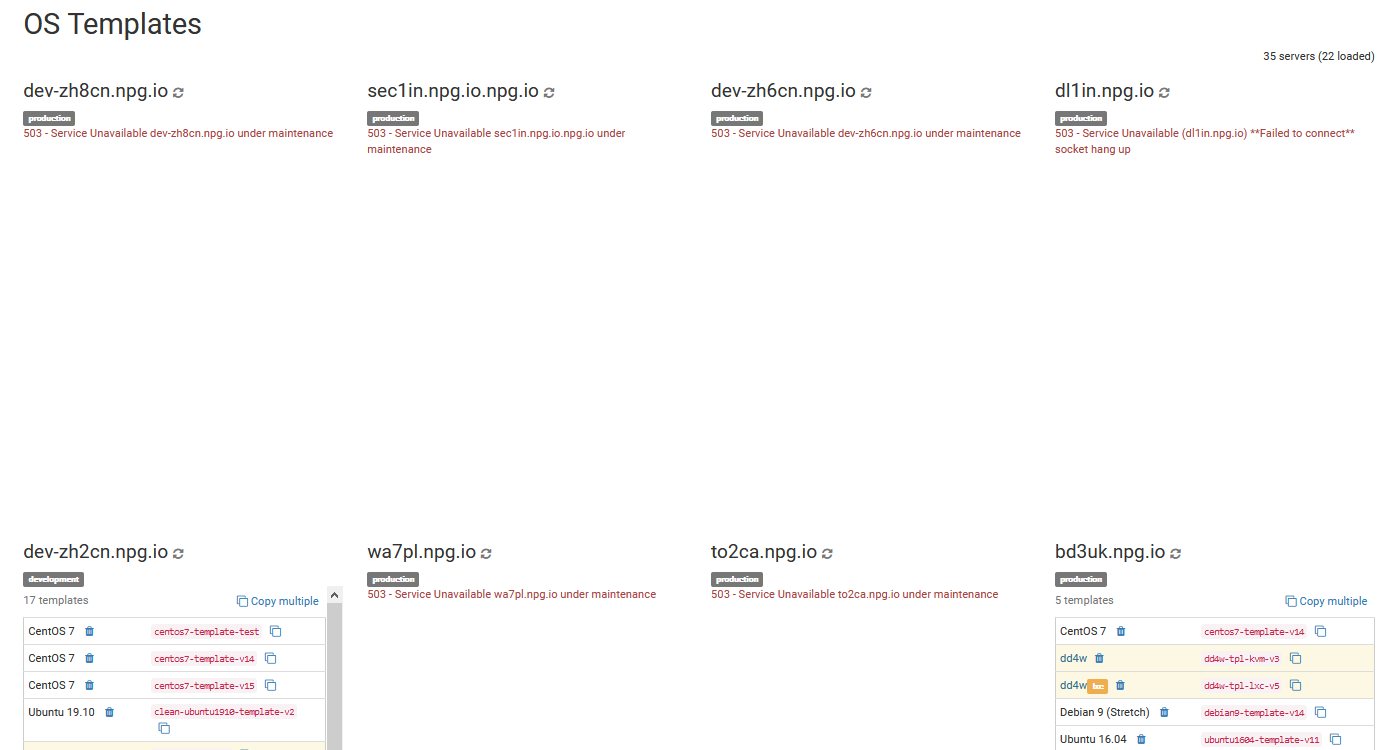
Within this area, you are able to duplicate, delete, or contrast all OS templates hosted in your cloud here in Hungary. Keep in mind that moving numerous templates may affect your server’s network performance and overall usage. It is recommended to carry out copy operations during off-peak times.
Bulk Removal of OS Templates
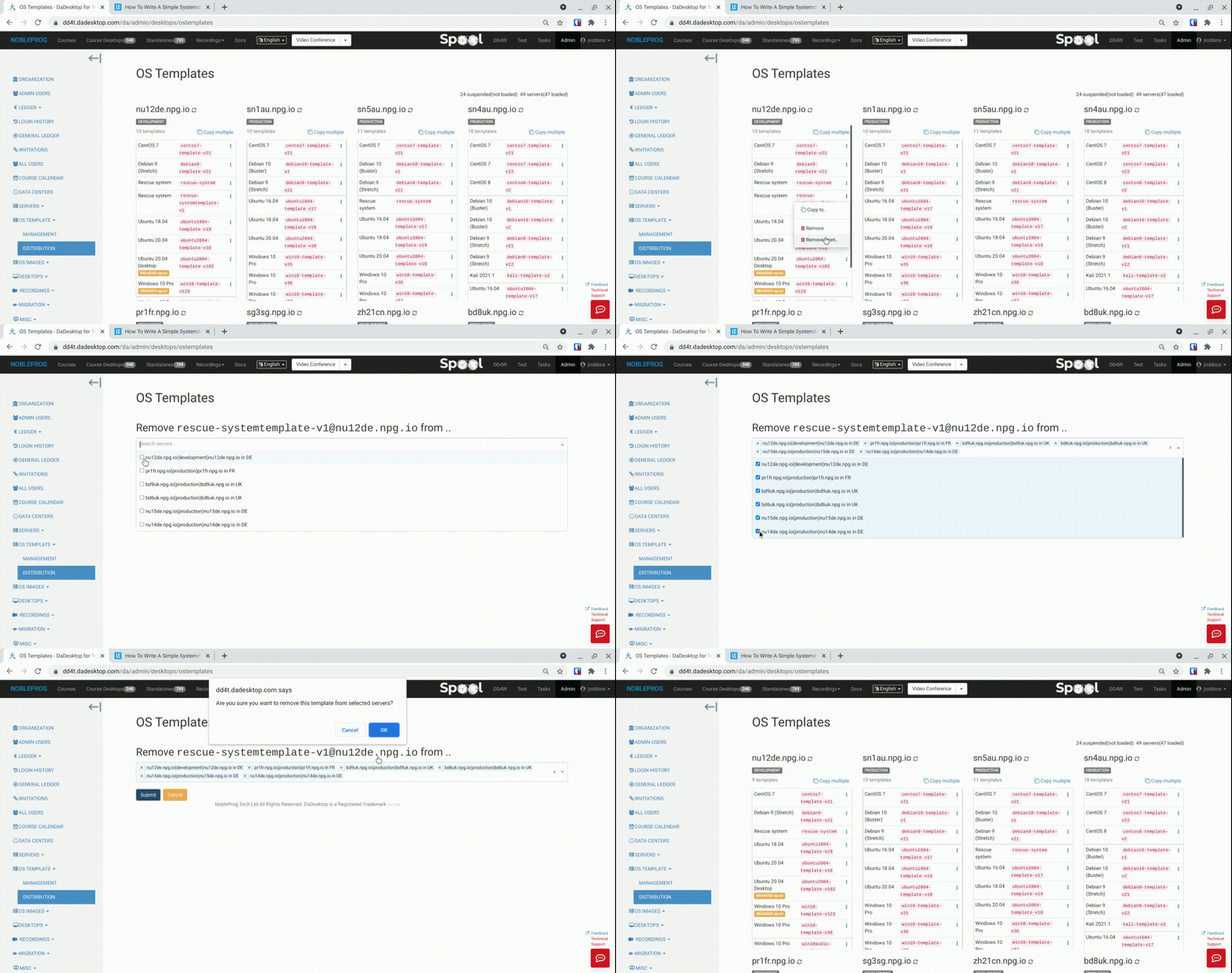
A recently added capability enables you to delete templates from multiple servers simultaneously. What used to be a laborious, manual process is now swift and straightforward.
- Simply pick a server containing the necessary template, then use the 'Remove from .. ' option (the 'Remove' choice is for deleting a single template at a time)
- You’ll see a list exclusively of servers that possess that particular template
- Check the servers from which you want to delete the template
-
Click 'Submit' and verify the action to complete the deletion process